
Walking into Destrehan High School for the first time was like stepping into a new world. I had come from St. John Parish, where the majority of my teammates and classmates were Black. But here, at Destrehan, I experienced something very different—a cultural shock I’ll never forget.
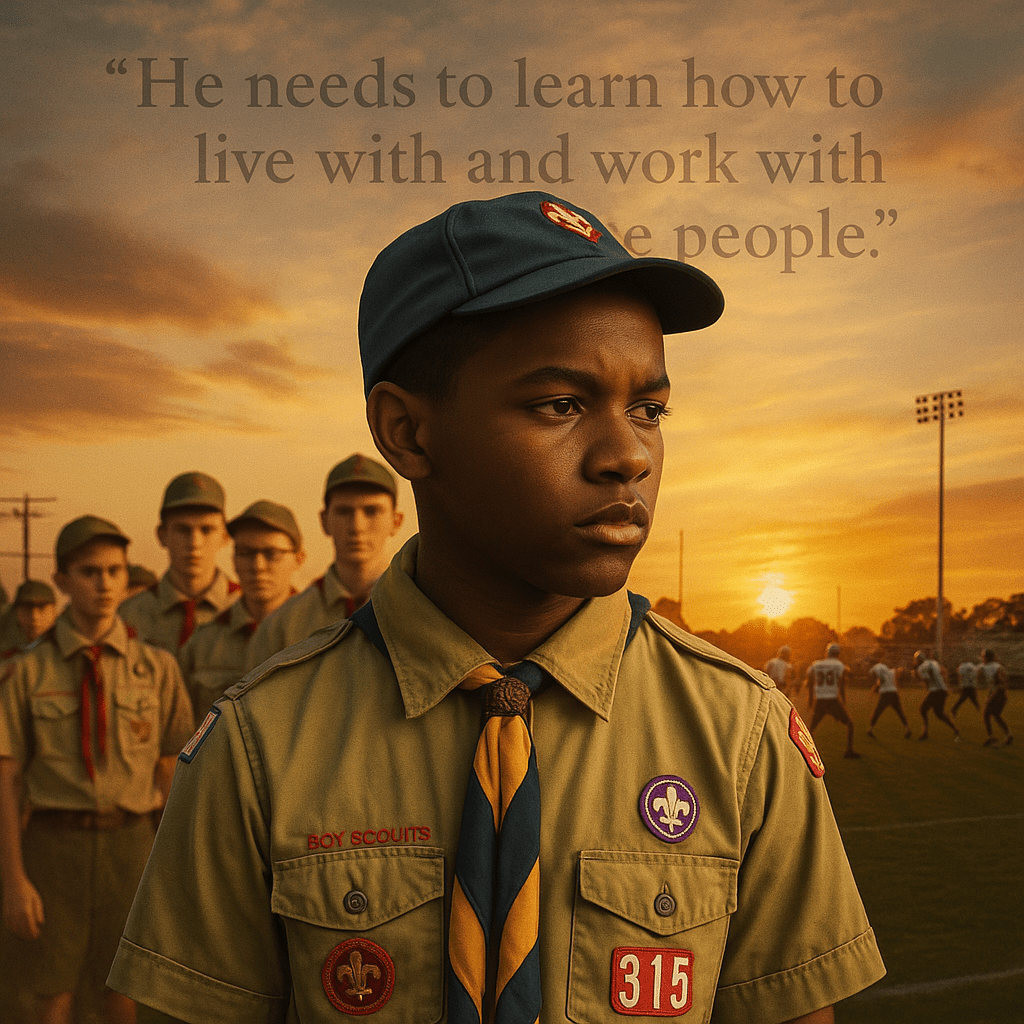
The hallways were filled with Black students, but once football practice started, everything shifted. The starters on both offense and defense were mostly white. It was a moment that reminded me of the time my mother signed me up for Boy Scouts. I was the only Black kid in my group. The pack leader even asked my mom if she wanted to move me to a different group with more Black kids. My mom simply said:
> “No. He needs to learn how to live with and work with white people.”
That moment shaped me more than I realized at the time.
Growing up, I had always played with talented athletes from St. John Parish—football, baseball, you name it. I earned a reputation: talented, yes, but also undisciplined, hot-headed, and difficult when things didn’t go my way. That wasn’t just a stereotype thrown around about kids from where I’m from. For me, it was the truth. But that was about to change.
At Destrehan, I wasn’t just the new kid—I was an outsider. Many of the guys had grown up together. There were whispers asking why someone like me was even allowed to attend the school. Racial tensions were in the air after a tragic incident involving a white student’s death and a Black student receiving the death penalty. But I came for a reason—to grow, to ball out, and to be better.
The first day of practice blew me away. I was handed a duffel bag with my practice gear, and we walked onto that field as one unit. That sense of unity was unlike anything I had experienced before. This was different. This wasn’t just football—this was the Fighting Wildcat Way.
Coaches demanded accountability. Players held each other to a higher standard. The energy, the yelling, the encouragement—it was a brotherhood. No matter who messed up, someone was right there to lift you up and tell you, “Let’s get it right.”
On defense, only two starters were Black: Danta Smith and Eddie Brooks. Danta, my big bro, was a wild, physical safety who brought life to the field and the weight room. He and the other DBs—mostly white—taught me what it meant to be a unit. No egos, just purpose.
Offensively, we ran the Wing T, and our linemen—the Mudcats—were some of the toughest dudes I had ever seen. Craig Schexnaydre and Victor Arrieta stood out, along with younger guys like Trevor Tate. Our quarterback, Lee Erickson, and his backup, Chris Auction, led with confidence, while our backs—Ryan Seminole, Michael Stewart, Oliver Aguilard (OJ), Derwin Deggs, and Brian White—were explosive threats on any given play.
On defense, Eddie Brooks anchored the D-line with beasts like Brandon Petite and Dano Napoli. Brian Shoemaker was our vocal middle linebacker with the hair of a warrior and the presence of a boss. Then there was Scott Sidwell—transferred from OL to LB—and instantly became the general on the field. His leadership embodied what it meant to be a Fighting Wildcat.
I can’t forget the DBs: Johnny Rupert, Gary Smith, and Tommy Griner. But it was Dante “Head” Smith, OJ, Deggs, and Jason Smothers (“Choke”) who impacted me the most. They were my examples—my Black leaders. Still, guys like Sidwell and Shoemaker showed me the universal language of leadership.
Looking back, that freshman year was more than just football. It was about growing up. Learning discipline. Becoming a teammate. Learning to thrive in a new world. These guys—Black and white—helped shape the Wildcat I would become.
This isn’t just another episode. This is a pause. A moment of reflection. A chance to say thank you to those who stood out and helped mold me. Everything I would become in my three years at Destrehan started here—with this team, this culture, this brotherhood.

 DM9: Beyond Boundaries
Leave a comment